


TL;DR
A Pre-Production Inspection (PPI) is a proactive quality control step that assesses raw materials and components before mass production begins to mitigate risks. In contrast, a First Article Inspection (FAI) is a formal verification process conducted on the first parts produced to ensure the manufacturing process can create products that meet all engineering specifications. Essentially, PPI checks the inputs, while FAI validates the output of the initial production run.
Defining the Core Concepts: PPI and FAI Explained
In manufacturing, precision and consistency are paramount. To achieve this, quality control processes are implemented at critical stages of the production lifecycle. Two of the most important, yet often confused, are the Pre-Production Inspection (PPI) and the First Article Inspection (FAI). Understanding their distinct roles is essential for any company looking to manufacture high-quality goods consistently.
A Pre-Production Inspection (PPI) is an early-stage risk assessment. As detailed by quality control experts, a PPI is performed before production starts to pre-qualify all inputs. This includes verifying the quality and quantity of raw materials, checking components from suppliers, and ensuring that machinery, tools, and fixtures are correctly set up and calibrated for the upcoming production run. The primary goal of a PPI is to identify and address potential quality risks and conformance issues before they can impact the entire manufacturing process, thereby preventing costly delays and rework.
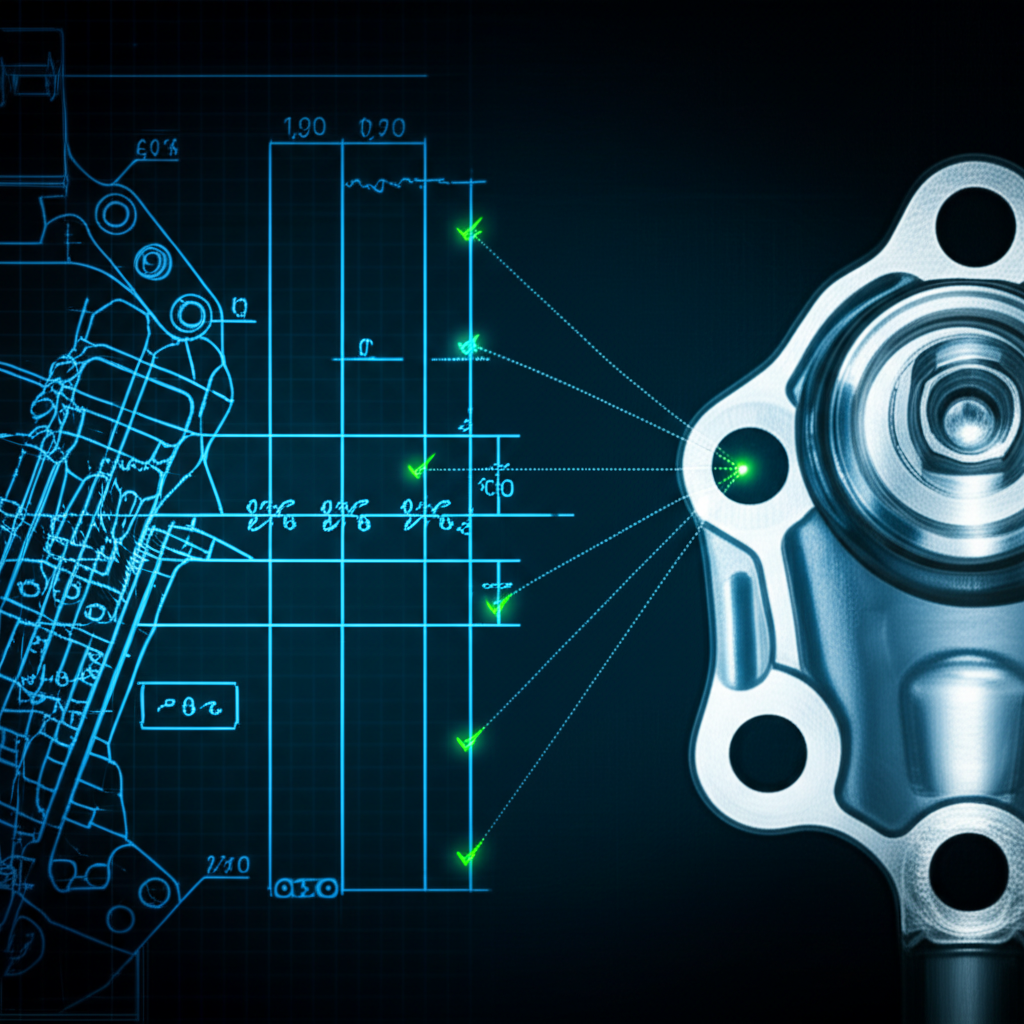
Conversely, a First Article Inspection (FAI) is a formal, evidence-based process that validates the manufacturing process itself. According to a comprehensive guide from 1Factory, an FAI involves a meticulous review of the first part (or small batch of parts) produced from a new or modified production line. This inspection compares every dimension, feature, and note on the engineering drawings and specifications against the physical part. The FAI serves as definitive proof that the established manufacturing process is capable of consistently producing parts that conform to all design requirements.

Key Differences: A Head-to-Head Analysis
While both PPI and FAI are crucial for quality assurance, they operate at different stages and with different objectives. Misunderstanding their application can lead to gaps in quality control. The following table and explanations break down their core distinctions.
| Criteria | Pre-Production Inspection (PPI) | First Article Inspection (FAI) |
|---|---|---|
| Timing | Before mass production begins. | At the very start of the first production run. |
| Primary Purpose | Risk assessment and prevention. To verify inputs and readiness. | Process validation and verification. To confirm outputs meet design specifications. |
| Scope of Inspection | Focuses on raw materials, components, tooling, and supplier readiness. | Focuses on the first finished product(s) coming off the production line. |
| Key Question Answered | “Are we ready to start production correctly?” | “Can our process produce a part that meets every specification?” |
| Documentation Output | A PPI report detailing the status of materials and equipment. | A detailed First Article Inspection Report (FAIR) with measurements for every design characteristic. |
The most significant distinction lies in their timing and purpose. A PPI is a preparatory step, ensuring all ingredients for production are correct. It’s about preventing problems before they start. For example, a PPI would catch a shipment of incorrect raw materials or a miscalibrated machine before a single part is made. An FAI, on the other hand, is a reactive validation. It occurs after the process has been set up and run for the first time. It meticulously checks the result of that process to confirm it works as designed. As noted in a detailed tutorial by Movley, the FAI is a critical gate before authorizing full-scale production, ensuring that any deviations are identified and corrected immediately.
When to Implement Each Inspection: Practical Scenarios
Knowing the theoretical differences is useful, but applying these inspections correctly in real-world scenarios is what truly drives quality. Each inspection is triggered by different events in the manufacturing lifecycle.
When to Use a Pre-Production Inspection (PPI)
A PPI is your first line of defense against production failures and should be considered essential in several situations. It is particularly critical when working with new suppliers or when sourcing from different regions where on-the-ground verification is necessary. For businesses sourcing from overseas, a trusted partner is invaluable. As companies that provide quality control services emphasize, having eyes in the factory for pre-production checks and audits ensures your specifications are met from day one. Other key scenarios for a PPI include:
- Introducing a new raw material or critical component into your product.
- Onboarding a new supplier for the first time.
- Restarting production after a prolonged shutdown where equipment or material storage could be compromised.
- When producing a high-value or complex product where material integrity is non-negotiable.
When to Use a First Article Inspection (FAI)
An FAI is not just for brand-new products. It is a mandatory step whenever a change could potentially affect the final product’s fit, form, or function. A successful FAI gives you the confidence to proceed with mass production. A new FAI is typically required in the following circumstances:
- The first production run of a completely new product.
- After any change to the product’s design (e.g., a new revision of the engineering drawing).
- When new or modified tooling, molds, or fixtures are introduced.
- If production is moved to a different facility or a new manufacturing line.
- Following a significant change in the manufacturing process itself (e.g., switching from CNC machining to casting).
Clarifying Common Industry Confusion: FAI vs. PPAP
The conversation around First Article Inspection often leads to another acronym: PPAP. The Production Part Approval Process (PPAP) is a comprehensive quality control framework, particularly common in the automotive and aerospace industries. It’s important to understand that FAI and PPAP are not interchangeable; rather, an FAI is often one component of a much larger PPAP submission.
PPAP is a formalized process that validates a supplier’s ability to consistently meet all of the customer’s design and quality requirements at the intended production rate. As explained by industry experts at IPQCCO, a full PPAP submission includes not just the dimensional verification found in an FAI, but also a suite of other documents. These can include Process Flow Diagrams, Process Failure Mode and Effects Analysis (PFMEA), Control Plans, and statistical process capability studies.
In short, an FAI verifies that the part is correct based on the initial run. A PPAP verifies that the entire production process is stable, capable, and ready for ongoing mass production. While an FAI might look at one to five pieces, a PPAP often involves a larger sample from a significant production run to prove consistency and capability over time. Therefore, while every PPAP will contain the elements of an FAI, an FAI by itself is not a PPAP.
Achieving Robust Quality Assurance
Pre-Production Inspection and First Article Inspection are not competing methods but complementary pillars of a strong quality assurance strategy. PPI acts as a preventative measure, securing the foundation of your production by verifying the inputs. FAI serves as the ultimate validation, confirming that your process delivers the intended output. By implementing both at the appropriate stages, manufacturers can significantly reduce defects, prevent costly rework, and build a reputation for delivering products that consistently meet the highest standards of quality and reliability.
Frequently Asked Questions
1. What is the difference between first piece and First Article Inspection?
While often used interchangeably, there is a formal distinction. A “first piece inspection” can be an informal check performed by an operator at the start of a shift to ensure the machine is set up correctly. A formal First Article Inspection (FAI) is a much more comprehensive and documented process. An FAI meticulously verifies every dimension, note, and specification on the engineering drawing against the first part produced from a new or altered process and generates a formal report (FAIR) as evidence of compliance.
2. What does First Article Inspection include?
A complete First Article Inspection Report (FAIR) is a detailed package of documentation. It typically includes a “ballooned” drawing where every dimension and note is numbered, a results form listing the required measurement for each numbered feature, the actual measurement obtained from the part, and a pass/fail determination. It also includes certifications for raw materials and any special processes (like plating or heat treating), and results from any required functional testing.
3. What is a PPI pre-production inspection?
A Pre-Production Inspection (PPI) is a quality control inspection conducted before the manufacturing process begins. Its purpose is to assess the quality and quantity of all inputs, including raw materials and components, to ensure they conform to product specifications. It also involves checking the readiness of production machinery and tooling, serving as a critical risk assessment to prevent issues before mass production starts.

