


TL;DR
China quality inspection standards are a framework used by importers to verify that products meet specific requirements before shipment, primarily using the internationally recognized Acceptable Quality Level (AQL) system. This process involves various inspection types at different production stages to manage quality, mitigate the risk of defects, and ensure compliance with both contractual obligations and regulatory requirements. Effectively implementing these standards is crucial for protecting your investment and maintaining brand reputation when sourcing from China.
Understanding the Core Quality Standards: AQL and ISO
When navigating the manufacturing landscape in China, a firm grasp of the core quality standards is essential. The most prevalent of these is the Acceptable Quality Level (AQL), a statistical sampling method used to determine the quality of a product batch without inspecting every single item. This standard is internationally recognized and has equivalents like ISO 2859-1 and ANSI/ASQ Z1.4, providing a common language for quality between importers and suppliers. The AQL standard allows you to set a tolerance for defects, defining the maximum number of defective units acceptable in a randomly selected sample.
The AQL system works by classifying defects into three main categories based on severity. This classification helps prioritize issues and make informed decisions about whether to accept or reject a production lot. Understanding these categories is the first step in creating a robust quality control checklist. A third-party inspection service will use these predefined levels to conduct their assessment and provide a detailed report.
Here is a breakdown of the defect classifications used in AQL inspections:
| Defect Type | Description | AQL Tolerance |
|---|---|---|
| Critical Defects | Defects that could cause harm to the user or violate mandatory regulations. Examples include sharp edges on a toy or incorrect electrical wiring. | 0% – A single critical defect typically results in the failure of the entire inspection. |
| Major Defects | Defects that are likely to result in product failure, reduced usability, or obvious visual flaws that would prevent its sale. Examples include a non-functioning electronic device or a significant scratch on a piece of furniture. | Typically 2.5% |
| Minor Defects | Defects that do not affect the product’s function but represent a deviation from the specified quality standards, such as a small cosmetic blemish or a slight color variation. | Typically 4.0% |
By defining your AQL for each defect type in your purchase order, you provide your supplier with clear, measurable targets. This proactive approach minimizes ambiguity and establishes a contractual basis for quality expectations. It transforms quality control from a subjective assessment into an objective, data-driven process, which is fundamental to successful sourcing.
The Main Types of Quality Inspections
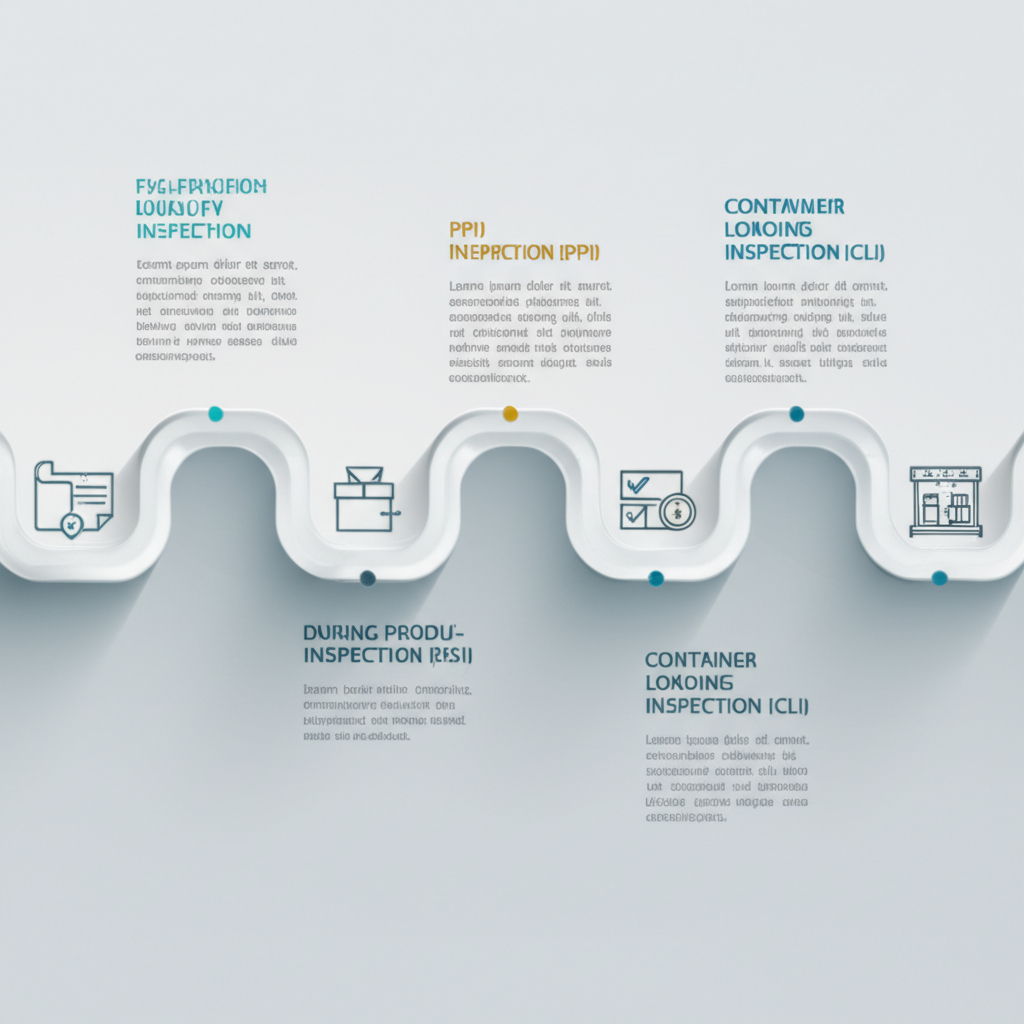
To ensure comprehensive quality control throughout the manufacturing process, importers can leverage several types of inspections, each serving a specific purpose at a different stage. Engaging with these inspections provides visibility into your production and allows for corrective action before minor issues become major problems. The four primary types of inspections are a cornerstone of effective supply chain management.
1. Pre-Production Inspection (PPI)
A Pre-Production Inspection is conducted before mass production begins. Its main purpose is to verify that your supplier understands your specifications and that the raw materials and components intended for production meet the required quality standards. This early-stage check helps identify potential problems with materials, tooling, and production setup, preventing delays and costly errors down the line. A PPI is particularly important when working with a new supplier or launching a new product.
2. During Production Inspection (DPI)
Also known as an In-Process Inspection, the DPI takes place when a portion of the order (typically 20-50%) has been completed. This inspection allows you to assess the quality of the initial products coming off the assembly line and verify that the manufacturing process is consistent with the approved samples. Identifying deviations or defects at this stage is far more efficient and cost-effective than discovering them after the entire order is finished, as it allows for immediate adjustments to the production process.
3. Pre-Shipment Inspection (PSI)
The Pre-Shipment Inspection is the most common and arguably the most critical type of inspection. It is performed once 100% of the products are manufactured and at least 80% are packed for shipping. During a PSI, an inspector uses the AQL standard to randomly sample products and check for conformity in terms of quantity, workmanship, functionality, color, packaging, and labeling. This final check is your last opportunity to identify any quality issues and have them rectified before the goods are shipped and final payment is made.
4. Container Loading Inspection (CLI)
Also called a Container Loading Check (CLC), this inspection verifies that the finished and packed goods are handled and loaded into the shipping container correctly. The inspector checks the container’s condition, verifies product quantities, ensures proper packaging and labeling, and supervises the loading process to prevent damage during transit. A CLI provides peace of mind that the products you approved during the PSI are the exact ones that are shipped, and that they are loaded securely for their journey.
Navigating Key Chinese Inspection Bodies: CCIC & CIQ
While third-party inspection companies are the most common partners for importers, it’s also important to understand the role of official and quasi-official Chinese bodies. Two key entities you may encounter are the China Certification & Inspection Group (CCIC) and China Inspection and Quarantine (CIQ). Confusing them with commercial inspection services is a common mistake for those new to importing from the region.
The China Certification & Inspection Group (CCIC) is an independent organization authorized by the Chinese government to provide inspection and certification services. A CCIC inspection may be performed on a voluntary basis to provide an official confirmation of a product’s condition before shipment. However, in some cases, a CCIC inspection report is mandatory for certain goods to be cleared for import into China or export from China. Failure to provide a required report can result in the goods being rejected by customs.
On the other hand, the inspection and quarantine functions for goods at the border are now handled by the General Administration of Customs of the People’s Republic of China (GACC). In 2018, the former China Inspection and Quarantine (CIQ) body was fully integrated into the GACC. This government agency is directly responsible for inspecting goods to ensure they meet the country’s health, safety, and environmental regulations. While CCIC acts as a third-party inspection service provider, the GACC functions as the regulatory enforcement agency at the port. Understanding this distinction is crucial for ensuring smooth customs clearance and regulatory compliance.
The Step-by-Step Quality Control Process
Implementing a successful quality control strategy in China involves a structured process that begins long before production starts. Following a clear roadmap ensures that your expectations are communicated effectively and that you have checkpoints to verify quality at every critical stage. This systematic approach reduces risks and helps build a more reliable and transparent supply chain.
- Define Your Quality Standards and Checklist: The first step is to create a detailed quality control checklist. This document should clearly outline your product specifications, required materials, color codes (e.g., Pantone), dimensions, labeling, and packaging requirements. Crucially, it must also define your AQL for critical, major, and minor defects. This checklist becomes the definitive guide for both your supplier and the inspector.
- Select a Reliable Inspection Partner: While some businesses rely on their supplier’s internal QC, using an independent third-party inspection service provides an unbiased assessment of your products. These firms act as your representative on the ground. For instance, sourcing from China requires a trusted partner for services from factory audits to container loading supervision. A dedicated service can act as your eyes in the factory, ensuring products meet exact specifications. To secure your supply chain, you might explore a full range of quality control services from a specialized provider.
- Schedule Inspections at Key Production Stages: Do not wait until the end of production to check for quality. Schedule the appropriate inspections based on your product’s complexity and your risk tolerance. A typical plan includes a During Production Inspection (DPI) to catch early issues and a final Pre-Shipment Inspection (PSI) to verify the finished order before payment.
- Review the Inspection Report Thoroughly: After each inspection, you will receive a detailed report containing photos, measurements, and a summary of findings. This report will highlight any defects found and classify them according to your AQL. Review this document carefully and immediately.
- Communicate with Your Supplier: If the inspection report reveals issues, communicate with your supplier promptly and clearly. Provide them with the report and specify the required corrective actions, such as reworking defective items or sorting the entire batch. A good supplier relationship is based on clear communication and a shared goal of producing a quality product.
- Approve Shipment or Order a Re-Inspection: Based on the inspection results and your supplier’s response, you can make an informed decision. If the quality is acceptable or minor issues have been resolved, you can approve the shipment. If major or critical defects are present, you should hold the shipment and may require a re-inspection after the supplier has corrected the problems.
Frequently Asked Questions
1. What is QC in China?
QC, or Quality Control, in China refers to the processes and services used to ensure that products manufactured in the country meet the specific quality, safety, and regulatory standards of the importer. It involves a combination of product inspections, factory audits, and laboratory testing to monitor and verify product quality throughout the production cycle.
2. What are the 4 types of quality inspection?
The four main types of quality inspection are Pre-Production Inspection (PPI) to check raw materials, During Production Inspection (DPI) to monitor the manufacturing process, Pre-Shipment Inspection (PSI) to verify finished goods, and Container Loading Inspection (CLI) to ensure proper handling during shipment.
3. What is CIQ in China?
CIQ stands for China Inspection and Quarantine. In 2018, its functions were integrated into the General Administration of Customs of the People’s Republic of China (GACC), which is now the government authority responsible for the inspection and quarantine of all goods entering or leaving China. A certificate from the relevant authority is often required for customs clearance to certify that products comply with Chinese regulations regarding health, safety, and quality.
4. Does China have safety standards?
Yes, China has a comprehensive system of national laws and standards (known as GB standards) that regulate product safety, particularly for items like electronics, toys, and food products. Additionally, many factories are certified to international standards like ISO 9001 to meet the requirements of global buyers.

