


TL;DR
A comprehensive China inspection report is your primary tool for quality assurance. Look for detailed sections covering product conformity to your specifications, results from on-site functional tests, the overall production status, and a clear classification of all visual defects. Crucially, every finding, especially defects, should be documented with high-resolution photographs to provide objective, actionable evidence for your decision-making process.
Key Components of a China Inspection Report
A professional inspection report is far more than a simple checklist; it’s a detailed dossier on your production run. To properly assess your products, the report must be broken down into several key sections, each providing a different layer of insight into the quality and status of your order. Understanding what to look for in each part is essential for protecting your investment.
Here are the critical components you should expect to find:
- Quantity Verification: The most basic but crucial check. The inspector physically counts the products and shipping cartons to confirm the numbers match your purchase order. This prevents short-shipping and ensures you receive the full quantity you paid for.
- Product Specifications and Workmanship: This section verifies that the products meet your technical and aesthetic requirements. Inspectors compare the produced goods against your approved sample and specification sheet, checking for correctness in dimensions, weight, materials, colors, and overall construction. Workmanship assessment involves looking for any visual defects, inconsistencies, or functional flaws.
- On-Site Tests and Checks: This is where the product’s functionality, safety, and durability are put to the test. Depending on the product, these checks can be extensive. Common tests include function tests (e.g., turning on electronics), measurement checks with tools like calipers, assembly tests, and physical endurance tests like the carton drop test to ensure packaging can withstand shipping.
- Packaging and Labeling: Improper packaging and labeling can lead to damaged goods or logistical nightmares. The report should confirm that packaging materials are adequate, shipping marks are correct, and all labels (including barcodes or warning labels) are present and accurate according to your requirements.
- Photographic Evidence: A good report is a visual report. It should be filled with high-resolution photos of the products, the production line, the packaging, and, most importantly, any defects found. These images serve as undeniable proof and are critical for discussions with your supplier.
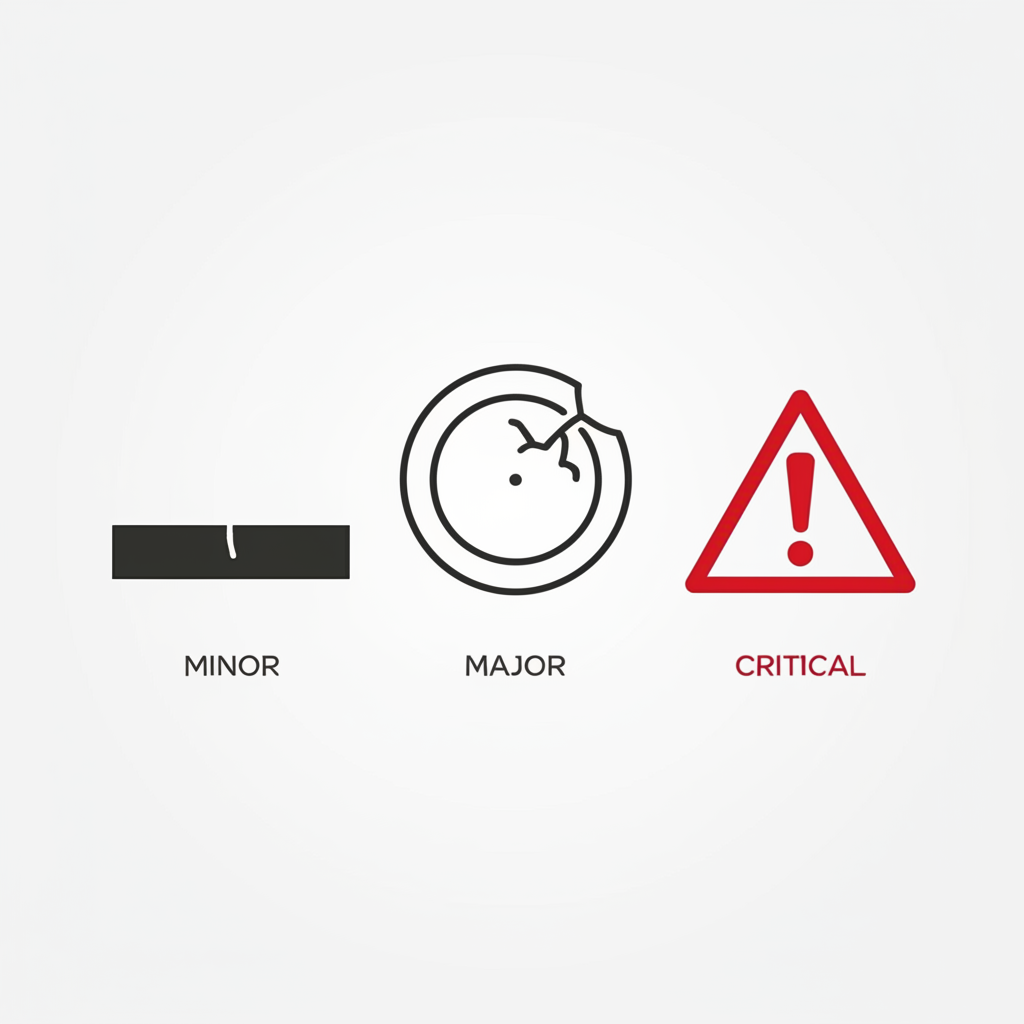
Decoding Defect Classification: Minor, Major, and Critical
Not all defects are created equal. To make an informed decision about a shipment, you must understand the severity of the issues found. Professional inspectors classify defects into three standard categories, which helps quantify the overall quality of the production batch. This system provides a clear framework for accepting, reworking, or rejecting an order.
The classification is based on the potential impact a defect has on the product’s usability, saleability, and safety. A clear understanding of these categories is essential for interpreting the report’s final summary and AQL (Acceptable Quality Limit) results.
Here is a breakdown of the three tiers of defects:
| Defect Type | Definition | Example |
|---|---|---|
| Minor | A small, often cosmetic flaw that does not affect the product’s function or form and is unlikely to be noticed by the end-user or cause a return. | A tiny scratch on an inconspicuous area, a single loose thread on a garment’s interior seam. |
| Major | A defect that is likely to be noticed by the consumer, affects the product’s appearance or function, and could lead to a customer return. | A noticeable stain on a shirt, a button that doesn’t work, a significant color mismatch from the approved sample. |
| Critical | A defect that renders the product unsafe, non-compliant with regulations, or completely unusable. | A sharp edge on a toy, faulty wiring in an electronic device, incorrect or missing safety labels. |
How to Analyze and Act on Your Report’s Findings
Receiving the inspection report is just the first step; knowing how to interpret and act on it is what truly safeguards your business. A systematic approach will help you leverage the report’s data to communicate effectively with your supplier and make a sound commercial decision. Rushing this process or misinterpreting the data can lead to costly mistakes.
Follow these steps to get the most out of your inspection report:
- Start with the Big Picture: Begin by reading the inspector’s overall summary and conclusion. This section should give you a quick overview of the inspection result—whether it passed, failed, or is pending—and highlight the most significant findings. It sets the context for the more detailed sections.
- Drill Down into the Details: Move on to the sections on workmanship and defects. Carefully review the descriptions of each defect and, most importantly, cross-reference them with the provided photographs. This visual confirmation is crucial to understanding the true nature and severity of the issues.
- Compare Against Your Standards: With a clear understanding of the defects, compare the findings against your original QC checklist, product specifications, and approved samples. Did the supplier miss a key requirement? Is the defect rate within the AQL you established? This step grounds your assessment in the standards you set at the beginning of the process.
- Communicate Clearly with Your Supplier: Armed with objective evidence, contact your supplier to discuss the findings. Share the relevant sections of the report and the photographic proof. For complex issues, clear communication is key. If you’re unsure how to proceed, working with a dedicated partner can be invaluable. Services that offer comprehensive quality control, such as those provided by firms like China Quality Inspection, can provide the expertise needed to navigate these discussions and secure your supply chain.
- Make an Informed Decision: Based on the report and your discussion with the supplier, you can now make a final decision. Your options typically include accepting the shipment (if defects are minimal), asking the supplier to rework the faulty products, or rejecting the entire batch if the quality issues are too severe.

Beyond the Checklist: What Separates a Good Report from a Bad One
While most inspection reports cover the same basic areas, their quality and utility can vary dramatically. A subpar report might simply confirm quantities and note obvious flaws, leaving you with an incomplete picture. A high-quality report, however, is a powerful analytical tool that provides deep insights and empowers you to make confident decisions.
A professional inspection report should be more than a simple checklist; it should provide context, data, and clear evidence. According to insights from quality control experts at Silq, a good report is distinguished by its depth and clarity. Knowing the difference helps you not only evaluate your products but also the effectiveness of your inspection partner.
Look for these signs of a high-quality report:
- Detailed, Objective Commentary: Instead of vague “pass” or “fail” statements, a good report provides specific comments from the inspector. It describes the context of the findings and offers clear descriptions of any tests performed and their outcomes.
- High-Resolution, Well-Documented Photos: Blurry or poorly lit photos are a major red flag. A professional report includes sharp, clear images of the products, packaging, and any defects. Each defect photo should be annotated or accompanied by a description that points out the exact issue.
- Clear Sampling Methodology: The report should explicitly state the sampling plan used (e.g., AQL levels) and the number of units inspected. This transparency is key to understanding the statistical significance of the findings.
- Actionable Data, Not Just Observations: The best reports translate observations into actionable data. This includes precise measurements, test results, and a clear breakdown of defects by type and severity, allowing you to see trends and assess the overall quality level quantitatively.
Frequently Asked Questions
1. What does a good inspection report look like?
A good inspection report is comprehensive, clear, and evidence-based. It should start with a high-level summary, followed by detailed sections on quantity, workmanship, on-site test results, and packaging. Most importantly, it must include numerous high-resolution photos that clearly document the products and any identified defects, providing objective proof to support its findings.
2. What are the four major components of an inspection report?
While a detailed report has many sections, the four core areas of inspection are: 1) Quantity verification to confirm order counts. 2) Product conformity, checking specifications, materials, and workmanship for defects. 3) On-site tests to verify function and safety. 4) Packaging and labeling verification to ensure goods are ready for shipment.
3. How do you read an inspection report?
To read an inspection report effectively, start with the summary for the overall result. Then, systematically review each section, paying close attention to the defect list. Cross-reference the inspector’s notes with the provided photos to fully understand each issue. Finally, compare the findings against your pre-defined quality standards (like your AQL) to decide on the appropriate next steps with your supplier.

