


TL;DR
A corrective action plan for a failed inspection is a formal process to fix non-conformance and prevent it from happening again. The core strategy involves accurately defining the problem, performing a thorough root cause analysis to find the underlying issue, and then developing, implementing, and verifying a targeted solution. This structured approach turns a costly failure into a valuable opportunity for process improvement.
Understanding the Purpose of a Corrective Action Plan
When an inspection fails, it’s more than just a single-batch problem; it’s a signal that a process is broken. A Corrective Action Plan (CAP) is a formal, documented strategy designed to systematically address these failures. Its primary purpose is not just to fix the immediate issue—a step known as a ‘correction’—but to implement ‘corrective actions’ that prevent the problem from ever recurring. This distinction is crucial for long-term quality control and operational excellence.
A well-executed CAP serves several vital business functions. It provides a structured framework for problem-solving, moving teams away from quick fixes and toward lasting solutions. According to quality management experts, this systematic approach is essential for maintaining compliance with standards like ISO 9001 and satisfying customer expectations. The ultimate goals of a CAP are to:
- Address Non-Conformance: Systematically resolve the specific issue identified during the failed inspection.
- Prevent Recurrence: Identify and eliminate the root cause of the problem to ensure it does not happen again.
- Improve Processes: Use the failure as an opportunity to refine and strengthen your quality management systems.
- Demonstrate Compliance and Accountability: Create a formal record of how the issue was identified, analyzed, and resolved, which is often required for regulatory or client audits.
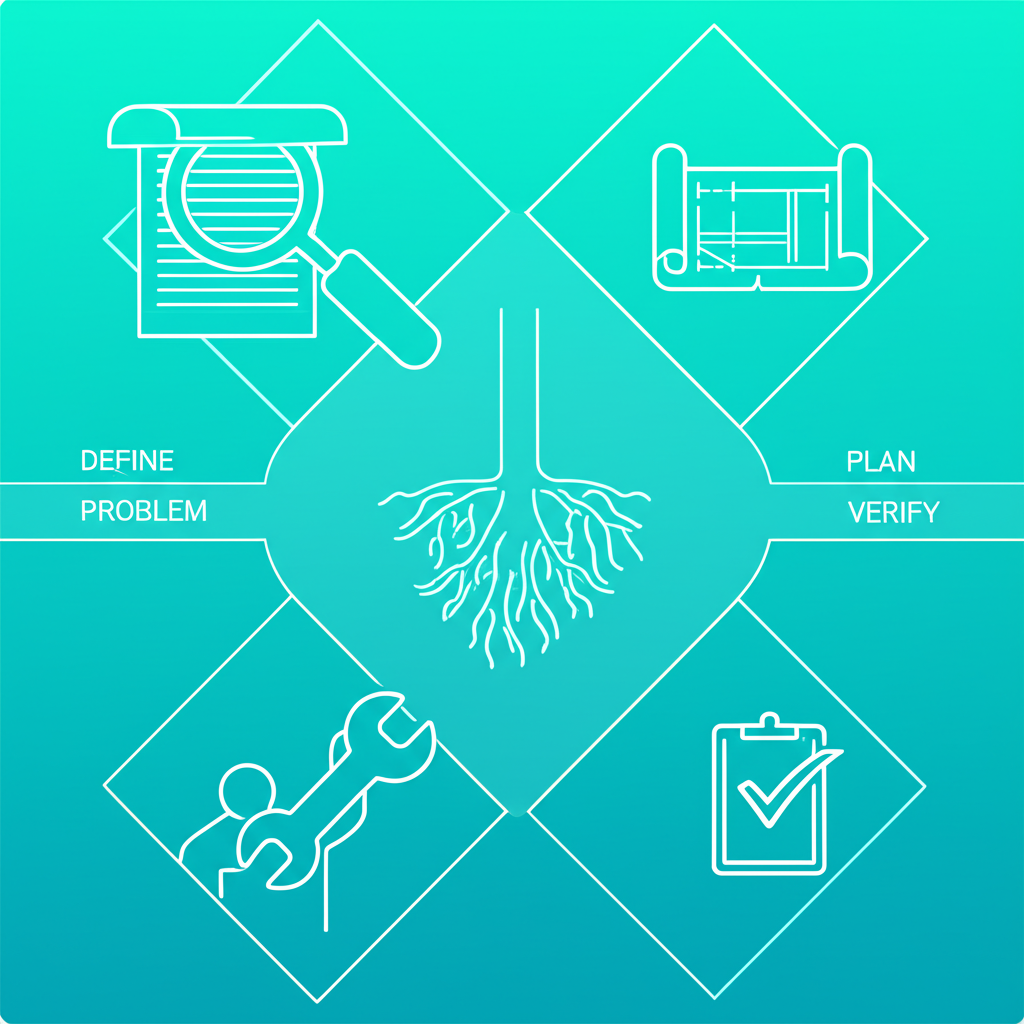
The Core Steps to Creating a Corrective Action Plan
Developing an effective corrective action plan requires a methodical approach. Rushing the process or skipping steps often leads to solutions that only address the symptoms, ensuring the problem will return. By following a structured sequence, you can ensure a thorough investigation and a robust solution. The following steps, synthesized from best practices across quality management, provide a reliable roadmap from problem discovery to resolution.
1. Define the Problem
The first step is to clearly and precisely define the non-conformance. Vague descriptions lead to ineffective solutions. Use the inspection report as your guide and gather all relevant data. Document what the problem is, where and when it was discovered, and its scope. For example, instead of “bad paint job,” specify “paint adhesion failure on 15% of units from batch #789, identified during final QC check.”
2. Contain the Problem
Before you can find the root cause, you must contain the damage. This involves immediate actions to isolate the affected products or processes. This might mean halting a production line, quarantining a batch of goods, or notifying customers if a defective product has already shipped. Containment is a ‘correction’—it stops the bleeding but doesn’t cure the disease. Document all containment actions taken.
3. Investigate the Root Cause
This is the most critical phase of the process. A superficial analysis will lead to a superficial solution. You must dig deep to understand the fundamental reason the failure occurred. Blaming an individual for “not paying attention” is rarely the true root cause; it’s usually a symptom of a flawed process, inadequate training, or systemic issue. This step is so important that it warrants its own detailed exploration, which we cover in the next section.
4. Develop Corrective Actions
Once you have identified the root cause(s), brainstorm specific actions to eliminate them. According to a guide from SafetyCulture, these actions should be S.M.A.R.T.: Specific, Measurable, Attainable, Relevant, and Time-bound. For each root cause, define a corrective action. For example, if the root cause of the paint failure was an incorrect oven temperature, the corrective action could be “Recalibrate oven #2 and install a digital temperature alarm, to be completed by Friday.”
5. Implement the Plan
With a clear plan in place, the next step is execution. Assign responsibility for each action to a specific person or team. Establish clear deadlines and provide the necessary resources (time, budget, personnel) for successful implementation. Consistent communication is key during this phase to ensure everyone involved understands their role and the plan’s progress.
6. Verify and Monitor Effectiveness
After implementation, you must verify that the actions were effective. Did the solution fix the problem? Did it introduce any new problems? This step involves gathering data over a period of time to confirm the issue is resolved and has not recurred. As detailed in a guide by QualityInspection.org, this follow-up is essential. If the problem persists, it means the root cause was not correctly identified, and the process must be revisited. Once validated, the new process changes should be standardized.
Mastering Root Cause Analysis: The Foundation of an Effective Plan
Many corrective action plans fail because they stop short of finding the true root cause. They fix the symptom—the immediate, visible problem—while the underlying disease remains. An effective plan is built on a foundation of thorough root cause analysis (RCA). This is the disciplined process of exploring the cause-and-effect relationships that led to the non-conformance until the origin of the problem is exposed.
Simply asking “what went wrong?” is not enough. You must repeatedly ask “why?” to move beyond the obvious. One of the simplest and most powerful RCA tools is the 5 Whys technique. This iterative method involves asking “Why?” five times (or as many times as needed) to peel back the layers of causality. Each answer forms the basis of the next question, leading you from the symptom to the core issue.
Let’s consider a practical example of a failed inspection for a batch of metal parts:
- Problem: Parts are failing a corrosion resistance test.
- 1. Why? Because the protective coating is too thin. (This is a symptom, not a root cause).
- 2. Why was the coating too thin? Because the parts were removed from the coating bath too soon.
- 3. Why were they removed too soon? Because the automated timer on the bath malfunctioned and didn’t sound the alarm.
- 4. Why did the timer malfunction? Because its battery was dead.
- 5. Why was the battery dead? Because there is no process for regularly checking and replacing the batteries in critical equipment. (This is the root cause).
Notice how the final answer reveals a systemic process failure, not just a technical or operator error. The corrective action is not to just replace the battery (a simple correction) but to implement a documented equipment maintenance schedule. By addressing the problem at this level, you prevent not only this specific failure but a whole class of potential future failures.
Best Practices for Documenting and Implementing Your Plan
A plan is only useful if it is clearly documented and properly implemented. The formal Corrective Action Report (CAR) is the central document that outlines every phase of the process. It serves as a record for audits, a communication tool for stakeholders, and a roadmap for the implementation team. A comprehensive CAR, as outlined by resources like 6sigma.us, ensures nothing is overlooked.
Writing a Clear Corrective Action Report
Your report should be clear, concise, and professional. It is a formal document that may be reviewed by regulators, clients, or senior management. Ensure it includes the following essential components:
- Problem Description: A detailed account of the non-conformance, referencing the specific inspection report.
- Containment Actions: A summary of the immediate steps taken to isolate the problem.
- Root Cause Analysis: A complete description of the RCA method used (e.g., 5 Whys) and the identified root cause(s).
- Corrective Action Plan: The specific S.M.A.R.T. actions to be taken to address each root cause.
- Responsibilities and Timelines: Clearly assign who is responsible for each action and the deadline for completion.
- Verification Plan: Describe how you will measure and verify the effectiveness of the solution.
- Signatures: Include spaces for approval from relevant stakeholders, such as the quality manager and department head.
Ensuring Successful Implementation
A well-written report is useless without successful implementation. This requires communication, training, and stakeholder buy-in. Ensure that everyone involved, from a machine operator to a department head, understands the changes being made and why they are important. Provide training on any new procedures or equipment. For companies sourcing products from overseas, preventing inspection failures often requires a proactive, on-the-ground presence. Engaging a partner for comprehensive factory audits and pre-shipment inspections can be a critical part of a long-term corrective and preventive strategy, ensuring quality standards are met before issues arise.

Turning Failure into a Foundation for Success
A failed inspection should not be viewed merely as a setback, but as a critical learning opportunity. By embracing a structured corrective action process, you transform a negative event into a powerful catalyst for improvement. The goal is not simply to fix a single defect but to strengthen the underlying systems that allowed the defect to occur. A robust corrective action plan builds resilience, enhances quality, and ultimately fosters a culture of continuous improvement that is essential for long-term success and customer trust.
Frequently Asked Questions
1. How do you write up a corrective action plan?
To write a corrective action plan, you create a formal document that details the problem, its root cause, the specific actions to be taken, who is responsible, and the deadlines. The process begins with a clear description of the non-conformance from the inspection report. Follow this with a thorough root cause analysis, then list the S.M.A.R.T. (Specific, Measurable, Attainable, Relevant, Time-bound) steps to fix the root cause. Finally, include how you will verify the fix was successful.
2. What are the 5 steps of a corrective action?
While the exact number of steps can vary, a typical corrective action process involves five core phases: 1) Define the problem and its scope. 2) Investigate to find the true root cause of the problem. 3) Develop a plan with specific actions to eliminate the root cause. 4) Implement the planned actions. 5) Verify and monitor the actions to ensure they were effective and the problem does not recur.
3. What are the 7 steps in making an action plan?
A general action plan often involves seven steps: 1) Define your goal or desired outcome. 2) List the specific tasks or steps required to reach that goal. 3) Prioritize tasks and set deadlines. 4) Assign responsibility for each task. 5) Identify and allocate necessary resources. 6) Implement and monitor the plan’s progress. 7) Evaluate the results and make adjustments. This framework is very similar to a corrective action plan but is applied more broadly to any project or objective.

