


TL;DR
CE marking is a mandatory declaration for electronic products sold within the European Economic Area (EEA), signifying the product meets the EU’s high safety, health, and environmental protection standards. Navigating CE marking requirements for electronic imports is a critical responsibility for importers, who must follow a structured process. This involves identifying applicable EU directives, ensuring the product passes conformity assessments, compiling comprehensive technical documentation, and drafting an EU Declaration of Conformity before affixing the mark.
Understanding CE Marking: The ‘What’ and ‘Why’ for Electronic Imports
The CE mark, an abbreviation for Conformité Européenne (French for ‘European Conformity’), is a mandatory legal marking required for many products sold in the European Union. It is not a quality certification or a mark of origin; rather, it is a self-declaration by the manufacturer that the product meets all applicable EU-wide requirements. For electronic imports, the CE mark serves as visible proof that the device complies with essential legislation concerning health, safety, and environmental protection, allowing it to move freely within the single market.
The fundamental purpose of CE marking is to safeguard consumers and workers from unsafe products and to ensure a level playing field for all businesses operating in the EU. By affixing the mark, a manufacturer takes full legal responsibility for the product’s compliance. This system places the onus on the businesses placing the product on the market—whether they are manufacturers or importers acting as manufacturers—to perform due diligence and ensure all standards are met before a single unit is sold.
For importers of electronic goods, understanding the implications of CE marking is crucial for several reasons:
- Market Access: Without a valid CE mark, electronic products covered by relevant directives cannot be legally placed on the market or sold within the EEA.
- Legal Compliance: Failure to comply with CE marking requirements can lead to severe penalties, including fines, imprisonment, and product recalls. National market surveillance authorities actively monitor products to ensure they are compliant.
- Consumer Trust: While not a quality mark, the CE symbol indicates that the product adheres to EU safety standards, which can enhance consumer confidence and brand reputation.
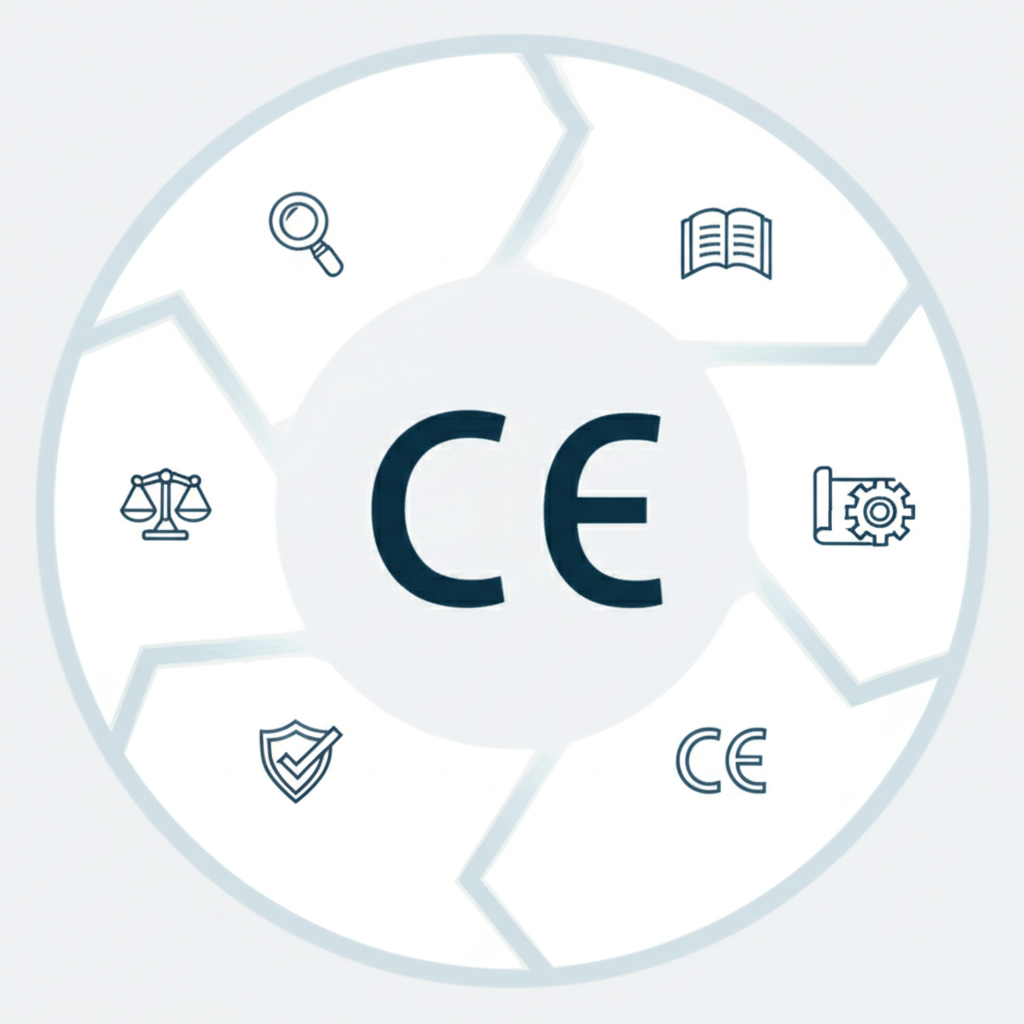
The 6-Step CE Marking Process: A Guide for Importers
Achieving CE compliance for electronic imports is a systematic process that requires careful planning and execution. While the specifics may vary by product, the framework generally follows six core steps. Importers must ensure that the manufacturer has completed these steps or, if acting as the manufacturer, manage this process directly.
-
Identify Applicable EU Directives and Harmonized Standards
The first step is to determine which specific EU directives and/or regulations apply to your electronic product. Several pieces of legislation could be relevant, and a product might need to comply with more than one. Once the directives are identified, you must consult the ‘harmonized standards,’ which are technical specifications that provide a presumption of conformity with the directive’s essential requirements.
-
Verify Essential Requirements
Each directive outlines the ‘essential requirements’ that a product must meet. For electronics, these typically relate to electrical safety, electromagnetic compatibility (EMC), restrictions on hazardous substances, and radio spectrum efficiency. The manufacturer must assess the product against these requirements to ensure it is designed and built to be safe and compliant.
-
Determine if a Notified Body is Needed
For some higher-risk products, EU legislation requires an independent conformity assessment by a third-party organization known as a Notified Body. However, for many electronic products, the manufacturer can self-certify compliance without mandatory third-party involvement. It is critical to check the specific directives applicable to your product to see if a Notified Body assessment is obligatory. You can search for accredited bodies in the official EU NANDO database.
-
Test the Product for Conformity
The product must be tested to verify that it meets the technical requirements of the applicable directives. This often involves laboratory testing to check for things like electrical safety, electromagnetic emissions, and the presence of restricted chemicals. Importers sourcing from outside the EU often find that their suppliers lack valid, verifiable test reports. Therefore, arranging for third-party testing is a common and necessary step to ensure compliance. For those sourcing from regions like China, partnering with a trusted inspection service can be invaluable. From comprehensive factory audits to meticulous pre-shipment inspections, a partner on the ground like China Quality Inspection can act as your eyes in the factory, ensuring products meet exact specifications before they are shipped.
-
Compile the Technical Documentation
The manufacturer must create and maintain a comprehensive ‘technical file’ or ‘technical documentation’. This file serves as evidence that the product is compliant. It should include design drawings, a bill of materials, risk assessments, test reports, user manuals, and a copy of the Declaration of Conformity. This documentation must be kept for 10 years after the last product is placed on the market and be made available to market surveillance authorities upon request.
-
Draft the EU Declaration of Conformity (DoC) and Affix the CE Mark
Once all preceding steps are complete and compliance is confirmed, the manufacturer must draft and sign an EU Declaration of Conformity (DoC). This is a legally binding document stating that the product fulfills all relevant requirements. Only after the DoC is signed can the CE mark be affixed to the product, its packaging, or accompanying documents. The mark must be visible, legible, and indelible.
Key EU Directives for Electronic Equipment
To correctly navigate CE marking, importers must be familiar with the primary directives governing electronic products. While there are over 20 directives that may require CE marking, a few are particularly critical for electronics. These directives establish the essential health and safety requirements that products must meet.
Understanding these rules is the first step in the compliance journey. Harmonized standards are then used to provide detailed technical specifications on how to meet the broader requirements of the directives. Here are four of the most common directives for electronic and electrical equipment:
| Directive | Scope |
|---|---|
| Low Voltage Directive (LVD) – 2014/35/EU | Applies to electrical equipment designed for use with a voltage rating of between 50 and 1000 V for alternating current and between 75 and 1500 V for direct current. It ensures that equipment within this scope is safe for use. |
| Electromagnetic Compatibility (EMC) Directive – 2014/30/EU | Concerns equipment that can generate or be affected by electromagnetic disturbance. It ensures that electronic devices do not interfere with other devices and are not themselves disturbed by electromagnetic interference. |
| Radio Equipment Directive (RED) – 2014/53/EU | Covers products that intentionally emit or receive radio waves for communication or radiodetermination. This includes devices like Wi-Fi routers, Bluetooth devices, and mobile phones. |
| Restriction of Hazardous Substances (RoHS) Directive – 2011/65/EU | Restricts the use of specific hazardous materials found in electrical and electronic products, such as lead, mercury, and cadmium, to protect the environment and public health. |
It is important to note that a single product may fall under the scope of multiple directives. For instance, a smart speaker with Wi-Fi would likely need to comply with the LVD (for electrical safety), EMC, RED, and RoHS directives. The manufacturer is responsible for ensuring compliance with all applicable legislation before affixing the CE mark.
Importer Responsibilities vs. Manufacturer Obligations
A common point of confusion in the CE marking process is the division of responsibilities. While the manufacturer is ultimately responsible for product design and conformity assessment, importers have distinct and legally binding obligations to ensure that only compliant products enter the EU market. Crucially, an importer who markets a product under their own name or brand is legally considered the manufacturer and assumes all of the manufacturer’s responsibilities.
Manufacturer Responsibilities
The manufacturer is responsible for the entire conformity assessment process from start to finish. Their core obligations include:
- Conducting the full conformity assessment procedure.
- Creating and maintaining the technical documentation.
- Drafting and signing the EU Declaration of Conformity (DoC).
- Affixing the CE mark and other required labels (e.g., product identifiers, manufacturer’s address).
- Ensuring ongoing production remains compliant.
Importer Responsibilities
Importers who are not branding the product as their own have a verification role. They must not place any product on the market that they believe is non-compliant. Their key duties include:
- Verifying Compliance: Ensuring the manufacturer has performed the necessary conformity assessment, drawn up the technical documentation, and affixed the CE mark correctly.
- Checking Documentation: Confirming that the product is accompanied by the EU Declaration of Conformity and that it is accurate. Importers must keep a copy of the DoC for 10 years.
- Ensuring Traceability: Making sure their own name and address are marked on the product or its packaging. This ensures that market surveillance authorities can trace the product back to them.
- Cooperating with Authorities: Providing all necessary documentation and information to national authorities upon a reasoned request.
In practice, importers often have to take a more hands-on role, as many non-EU manufacturers are not fully versed in EU regulations. This may involve commissioning lab tests, helping to create documentation, and ensuring label files are correct before production begins.
Assembling the Technical File and Declaration of Conformity (DoC)
The technical file and the EU Declaration of Conformity (DoC) are the two most critical pieces of documentation in the CE marking process. They serve as the comprehensive evidence that an electronic product meets all legal requirements. An importer must ensure the manufacturer has prepared these documents correctly or, if acting as the manufacturer, create them from scratch.
The technical file is a collection of documents that demonstrates how the product complies with the relevant directives. It must be created before the product is placed on the market and kept for 10 years. While its exact contents can vary, it typically includes:
- A general description of the product.
- Conceptual design and manufacturing drawings.
- A list of the harmonized standards applied.
- Risk assessment and analysis documents.
- Results of design calculations and examinations.
- All test reports from conformity assessments.
- A copy of the user manual and labeling artwork.
- A copy of the EU Declaration of Conformity.
The EU Declaration of Conformity (DoC) is a one-page legal document in which the manufacturer formally declares the product’s compliance with all applicable CE marking legislation. It is the final step before the CE mark can be affixed. The DoC must be signed by a responsible person within the manufacturing company and made available to authorities upon request. It must contain the following information:
- Product identifier (model, batch, or serial number).
- Name and address of the manufacturer or their authorized representative.
- A statement that the declaration is issued under the sole responsibility of the manufacturer.
- A description of the product allowing for traceability.
- A list of all relevant EU directives and harmonized standards the product complies with.
- The name and identification number of the Notified Body, if one was involved.
- The place and date of issue, along with the signature and title of the authorized person.
For importers, obtaining and verifying the DoC is a non-negotiable step. Without a valid DoC, the CE mark on a product is meaningless, and the product cannot be legally sold in the EU.

Ensuring a Smooth Path to EU Market Access
Successfully navigating the CE marking requirements for electronic imports is a fundamental prerequisite for accessing the European market. It is a process rooted in diligence, documentation, and a clear understanding of legal responsibilities. For importers, this means moving beyond a simple transactional relationship with suppliers and engaging deeply with the compliance process.
The key takeaway is that responsibility cannot be outsourced entirely. Whether verifying a manufacturer’s existing documentation or taking on the manufacturer’s role for a private label product, the importer is a critical gatekeeper in the EU’s product safety framework. Proactively managing compliance by identifying directives, commissioning tests, and assembling the correct documentation is not just a legal obligation—it is a strategic business practice that mitigates risk, builds consumer trust, and secures long-term market access.
Frequently Asked Questions
1. Is CE marking required for all electronic products sold in the EU?
CE marking is mandatory for electronic products that fall under the scope of one or more CE marking directives, such as the Low Voltage Directive, EMC Directive, or Radio Equipment Directive. It is forbidden to affix a CE mark to a product not covered by these regulations. Almost all consumer electronics will require CE marking.
2. Can an importer rely on a supplier’s CE certificate?
An importer must perform due diligence. While a supplier may provide documents like a Declaration of Conformity or test reports, the importer is responsible for verifying their authenticity and applicability to the specific product being imported. It is common for importers to commission their own third-party testing to ensure the product is truly compliant, as relying solely on a supplier’s documentation can be risky.
3. What happens if a product is found to be non-compliant?
If national surveillance authorities find a product to be non-compliant, they can take several actions. This can range from requiring the importer to bring the product into compliance to ordering a full product recall from the market. In serious cases, the importer may face significant fines or even criminal prosecution. The product may be banned from sale across the entire EU.

