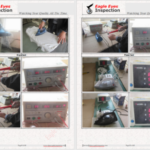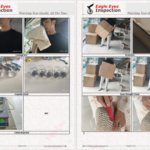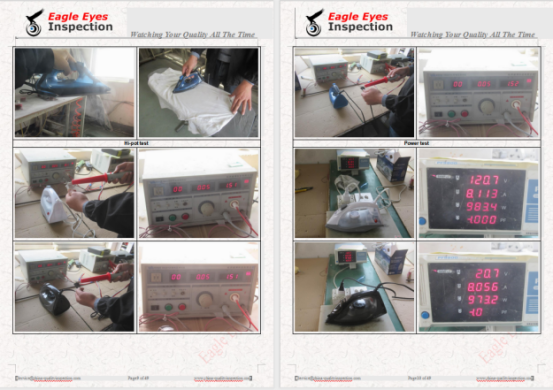
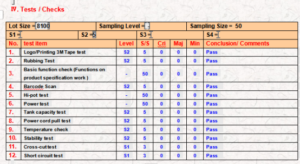
The key quality inspection procedures for an iron :
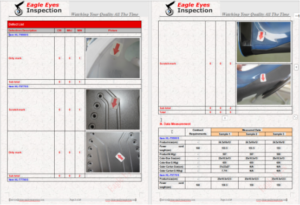
1. Visual Inspection
Check for scratches, dents, or discoloration on the soleplate, body, and handle.
Ensure labels, logos, and control markings are correct and legible.
Verify cord integrity (no kinks, cuts, or exposed wires).
2. Soleplate Check
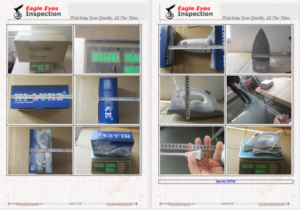
Flatness test (use a straight edge) – no warping or gaps.
Smoothness – no rough spots or burrs that could damage fabric.
3. Electrical Safety
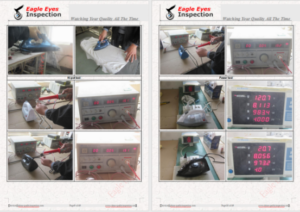
Plug and cord anchorage strength.
Insulation resistance test (≥1 MΩ at 500V typically).
Earth continuity test (for Class I irons) – resistance ≤0.1Ω.
4. Functionality Test
Temperature control: Heat up to all set levels (low, medium, high, linen/cotton).
Thermostat accuracy: Use a surface thermometer – actual soleplate temp should be within ±15°C of set value.
Auto shut-off: Check if it cuts off after specified time (e.g., 30s horizontal, 8–15 min vertical) and reactivates when moved.
Spray and burst of steam: Nozzle spray pattern, steam burst volume (no spitting of water).
Self-cleaning (if applicable): Function works without clogging.
5. Water Tank and Leakage Test
Fill with water – no leaks from tank, cap, or steam controls.
During steam operation, no water drips from soleplate (only steam).
6. Temperature Rise and Stability
Soleplate temperature distribution (hot spots acceptable?).
Handle temperature – must not exceed safety limits (e.g., ≤55°C for touch points per IEC 60335).
7. Packaging and Accessories
Check for instruction manual, measuring cup, stand (if any).
Packaging should protect the iron from shock and vibration.
8. Documentation Check
Model number, voltage, wattage, frequency, certification marks (CE, UL, ETL, etc.).