


TL;DR
Regular sample testing is a critical early warning system that prevents a recall disaster by identifying harmful contaminants like pathogens before products reach consumers. This proactive measure allows food producers to isolate and address contamination issues at the source, protecting public health and avoiding catastrophic financial and reputational damage. It forms the core of a comprehensive food safety strategy that must also include robust traceability systems and routine mock recalls to ensure the entire response plan is effective and ready for a real-world crisis.
The Foundational Role of Sample Testing in Averting Recalls
In the high-stakes world of food production, a product recall is more than a logistical challenge—it’s a potential catastrophe that can erode consumer trust and incur devastating financial losses. At the forefront of prevention is a scientifically grounded process: food safety sample testing. This practice serves as a proactive defense, designed to detect microbiological hazards or other contaminants before they have a chance to cause widespread harm. By systematically analyzing products, ingredients, and the production environment, companies can catch problems early, making it a non-negotiable component of modern food safety management.
The U.S. Food and Drug Administration (FDA) emphasizes a preventive approach, using sample testing to gather data that helps predict and stop future contamination events. This strategy involves two primary forms of testing. The first is product sampling, where finished goods, in-process materials, and raw ingredients are tested to ensure they are free from harmful contaminants. The second, environmental sampling, involves testing the surfaces and areas within a production facility. This is crucial because pathogens in the environment can easily cross-contaminate finished products, creating a significant public health risk. Together, these methods create a powerful surveillance system that acts as an early warning, allowing a company to address a threat before it escalates into a full-blown recall.
The benefits of a rigorous testing program extend far beyond regulatory compliance. First and foremost, it is a company’s most direct tool for protecting public health. Identifying a pathogen like Listeria or Salmonella in-house means contaminated products are never shipped, preventing foodborne illness outbreaks. Financially, the return on investment is immense. The cost of implementing a robust testing program is minuscule compared to the direct and indirect costs of a recall, which include retrieving products, litigation, regulatory fines, and lost sales. Perhaps most importantly, consistent and effective testing safeguards a brand’s reputation, which, once damaged, can take years to rebuild.
Implementing a Robust Sampling Program: From Strategy to Action
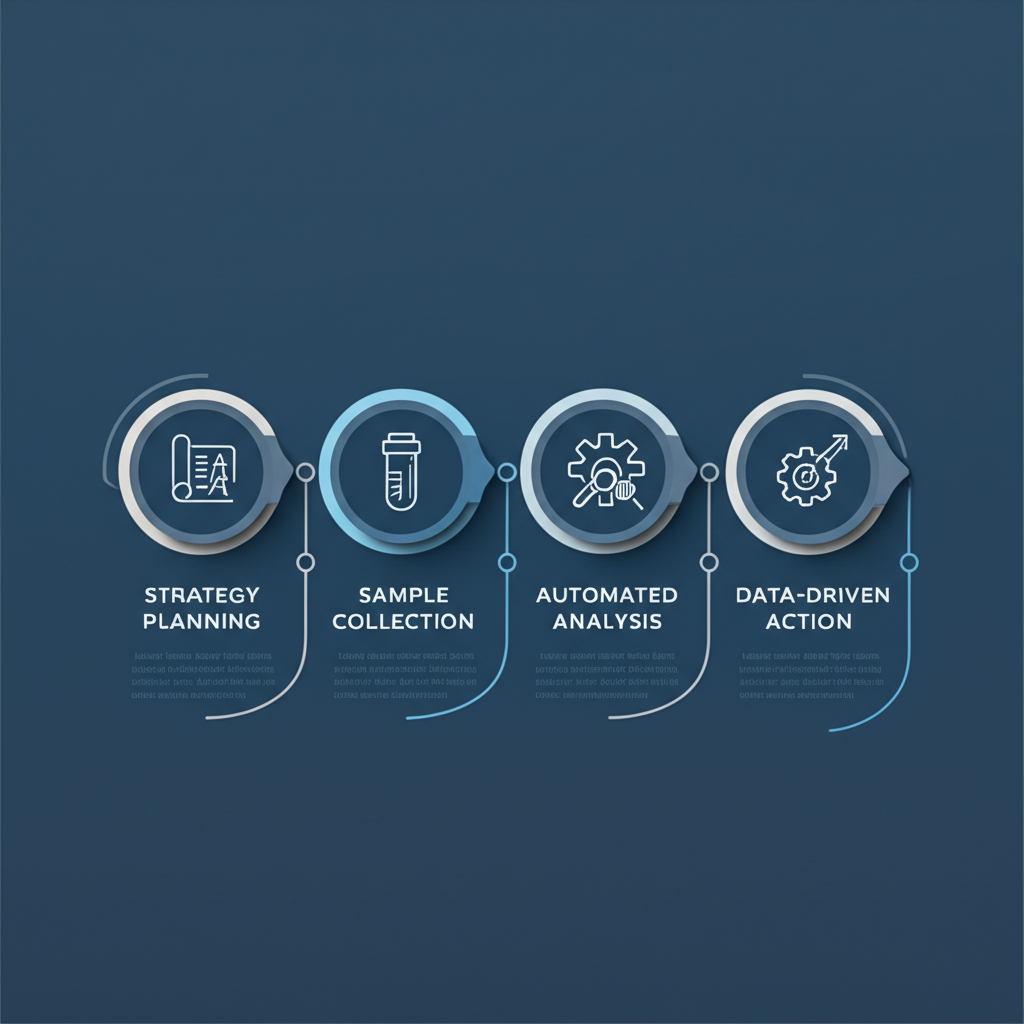
An effective sample testing program is not a random process but a well-designed strategy tailored to a facility’s specific risks. It requires a multi-faceted approach that covers planning, execution, and data analysis to ensure its integrity and effectiveness. A haphazard approach to testing is nearly as dangerous as no testing at all, as it can create a false sense of security while leaving significant safety gaps.
The program must be built on a foundation of several key components:
- Developing a Comprehensive Sampling Plan: A strategic plan identifies what to test, where to test, and how often. This should be a risk-based approach, focusing on high-risk ingredients, critical control points in the production process, and areas in the facility prone to microbial growth. The plan should be a living document, updated regularly based on testing data, changes in production, and emerging industry threats.
- Choosing Effective Testing Methods: Technology in pathogen detection has evolved significantly. While traditional lab-based cultures are still used, modern methods like automated pathogen detection offer faster and more precise results. As detailed in a report by Kraken Sense, automated systems using qPCR technology can provide results in under an hour, allowing for real-time monitoring and immediate intervention. This speed is critical in preventing contaminated batches from moving further down the supply chain.
- Analyzing and Acting on Data: Collecting data is only half the battle. The results must be analyzed to identify trends or persistent issues. A positive result should trigger immediate corrective actions, such as halting production, isolating affected batches, and conducting a root-cause analysis. This data-driven approach helps refine sanitation protocols and strengthens the overall food safety system over time.
For businesses with global supply chains, in-house testing must be complemented by external verification. Sourcing from international partners, for instance, requires a trusted partner on the ground. Companies can secure their supply chain by utilizing comprehensive quality control services that conduct factory audits and meticulous pre-shipment inspections. This ensures that raw materials and finished goods meet exact safety and quality specifications before they ever leave the factory, adding a critical layer of protection against recall-inducing failures.
The Mock Recall: Testing Your Preparedness Before a Crisis
Having a recall plan on paper is essential, but its true effectiveness remains unknown until it is tested. This is the purpose of a mock recall—a simulated crisis that stress-tests a company’s procedures, systems, and personnel. As legal experts from Butler Snow advise, a mock recall is a necessary exercise to prepare for a potential catastrophe, much like an emergency drill. It uncovers weaknesses in the plan, clarifies roles and responsibilities, and builds the institutional muscle memory needed to respond swiftly and effectively during a real event. The objective is to ensure that if a recall becomes necessary, the process is executed quickly and accurately to minimize risk to consumers and the business.
Conducting a successful mock recall involves several critical steps. According to guidance from New Zealand’s Ministry for Primary Industries, this exercise should be as realistic as possible, involving everyone who would participate in a genuine recall. A typical mock recall follows a structured process:
- Develop a Realistic Scenario: Create a plausible situation, such as the discovery of an undeclared allergen, foreign matter, or a microbiological hazard in a specific product batch. The scenario should include a backstory and supporting information to guide the exercise.
- Assemble the Recall Team: The designated recall team—which should include members from operations, quality control, legal, and communications—is activated to manage the simulated crisis.
- Execute Traceability Procedures: The team must quickly identify and locate all affected products throughout the supply chain, from the warehouse to distribution centers and retailers. This tests the accuracy and speed of the company’s record-keeping and traceability systems.
- Simulate Communications: Draft communications for regulatory bodies, supply chain partners, and the public. This step tests the clarity and efficiency of the company’s communication protocols.
- Review and Improve: After the exercise, the team conducts a thorough review to identify what went well and where gaps exist. The findings are then used to update and improve the official recall plan.
Regularly performing these simulations, ideally at least annually, is one of the most powerful actions a company can take to prevent a recall situation from escalating into a full-blown disaster. It transforms a theoretical plan into a practical, proven capability, ensuring the organization is prepared to act decisively when it matters most.
Building a Comprehensive Recall Prevention and Management Plan
While sample testing and mock recalls are vital tactics, they are most effective when integrated into a broader, strategic framework for recall prevention and management. A truly resilient food safety system is holistic, embedding quality and safety into every aspect of the operation. This comprehensive approach moves beyond reactive measures to create a culture of prevention that anticipates and mitigates risks before they can materialize into threats.
Several foundational programs form the pillars of this strategic framework. Good Manufacturing Practices (GMPs) establish the basic operational and environmental conditions necessary for producing safe food. Building on that, a Hazard Analysis and Critical Control Points (HACCP) plan provides a systematic approach to identifying, evaluating, and controlling food safety hazards. These programs work in concert to build safety into the production process from the ground up, reducing the likelihood of contamination occurring in the first place.
When a potential issue does arise, a well-defined management plan ensures a controlled and effective response. Many experts refer to the “Four C’s of Recall Management” as a guide for action. These principles help structure the response to contain the problem and protect the public efficiently:
- Containment: The immediate priority is to contain the issue by identifying and securing all affected products to prevent further distribution.
- Communication: Clear, timely, and accurate communication with regulatory agencies, supply chain partners, and consumers is critical to managing the situation and maintaining trust.
- Compliance: The response must adhere strictly to all regulatory requirements for reporting, record-keeping, and action.
- Closure: The process concludes with ensuring the affected product is properly handled (e.g., destroyed) and that corrective actions are implemented to prevent a recurrence.
Ultimately, preventing a recall disaster is not about a single tool but about an integrated strategy. It requires a commitment to proactive prevention, robust traceability systems for rapid response, and clear crisis communication plans. By weaving these elements together, a company can build a resilient system that not only protects consumers but also safeguards its own long-term viability.

Frequently Asked Questions
1. What are the four guidelines to follow for recalls?
The four core guidelines for managing a recall, often called the “Four C’s,” are Containment, Communication, Compliance, and Closure. Containment involves securing all affected products to stop their distribution. Communication requires providing clear and timely information to regulators, partners, and the public. Compliance means adhering to all legal and regulatory obligations. Closure involves ensuring the recalled product is properly disposed of and that steps are taken to prevent future incidents.
2. What is the objective of a mock recall?
The primary objective of a mock recall is to test and validate a company’s recall plan and procedures in a controlled, simulated environment. It ensures that employees are familiar with their roles, verifies the effectiveness of traceability systems for locating products quickly, and identifies any gaps or weaknesses in the response plan. By practicing beforehand, a company can ensure that a real recall is executed swiftly and accurately, minimizing risks to public health and the business.

